Choosing the right PC often starts with the processor. The CPU influences gaming performance, multitasking, productivity, content creation, and the overall responsiveness of a computer. However, Intel offers several processor families and performance tiers, which can make infiniarc choosing the right system more complicated.
Buyers may encounter PCs Intel Core Ultra 9, PCs Intel Core Ultra 7, PCs Intel Core Ultra 5, PCs Intel Core i9, PCs Intel Core i7, and PCs Intel Core i5 when comparing desktop computers. Although the names indicate different product tiers, the exact processor model and generation are essential when evaluating real-world performance.
Understanding these categories can help you select a PC that fits your gaming, professional, creative, or everyday computing requirements without paying for processing power you do not need.
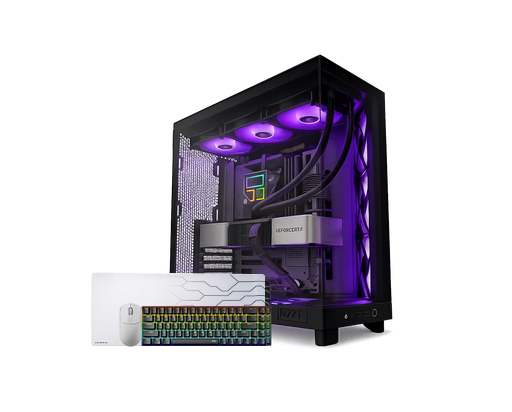
Why Does the Processor Matter When Choosing a PC?
The processor, or CPU, handles many of the calculations required by your operating system, games, applications, and background tasks.
CPU performance can affect multitasking, gaming frame rates in CPU-sensitive scenarios, video editing, software development, rendering, data processing, and general productivity.
However, the CPU should always be considered alongside other PC components, including:
- Graphics card or GPU
- RAM
- SSD storage
- Motherboard
- Cooling system
- Power supply
- Display
- Upgrade options
A high-end processor paired with insufficient RAM or an unsuitable graphics card may not provide the balanced performance you expect.

PCs Intel Core Ultra 9 for Demanding Performance
PCs Intel Core Ultra 9 target users looking for high levels of processing performance and modern platform capabilities.
Depending on the exact processor model, these systems can be relevant for demanding multitasking, gaming, content creation, development, professional applications, and other CPU-intensive workloads.
Core Ultra 9 PCs are particularly worth considering when applications can make meaningful use of higher processor performance. Creative professionals working with large projects, for example, may have different requirements from someone who primarily browses the web and uses office applications.
Because these systems can occupy a premium segment, buyers should also check the cooling system, RAM capacity, storage, motherboard, and GPU to ensure the entire PC is appropriately configured.

Who Should Consider an Intel Core Ultra 9 PC?
A Core Ultra 9 system can make sense for users who regularly run demanding workloads or want a high-performance desktop configuration.
Potential use cases include:
- High-end gaming
- Video editing
- Content creation
- Heavy multitasking
- Software development
- Professional applications
- Streaming
- CPU-intensive workloads
For lighter everyday computing, however, a lower processor tier may provide better value.

PCs Intel Core Ultra 7 for Performance and Versatility
PCs Intel Core Ultra 7 can offer an attractive middle ground for users who need strong performance but do not necessarily require the highest processor tier.
Depending on the specific CPU and system configuration, these PCs can handle gaming, streaming, productivity, creative applications, and demanding multitasking.
Core Ultra 7 can be particularly interesting for buyers building a versatile PC that needs to perform well across several types of workloads.
When comparing systems, consider the complete hardware configuration rather than focusing only on the CPU badge. An Ultra 7 PC with an appropriate GPU, sufficient RAM, fast NVMe SSD, and effective cooling may provide a better overall experience than an unbalanced higher-tier system.
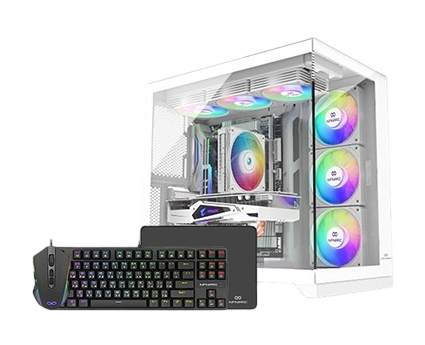
PCs Intel Core Ultra 5 for Mainstream Users
PCs Intel Core Ultra 5 are positioned toward mainstream users who want modern computing capabilities while maintaining a more balanced budget.
These systems can be suitable for everyday productivity, studying, office applications, entertainment, multitasking, and gaming when paired with an appropriate graphics card.
For many buyers, this category can also make financial sense because it allows more of the budget to be allocated to components that may have a greater impact on their specific workload.
A gamer, for example, may benefit more from pairing a suitable Core Ultra 5 processor with a stronger GPU than spending significantly more on the CPU while compromising graphics performance.
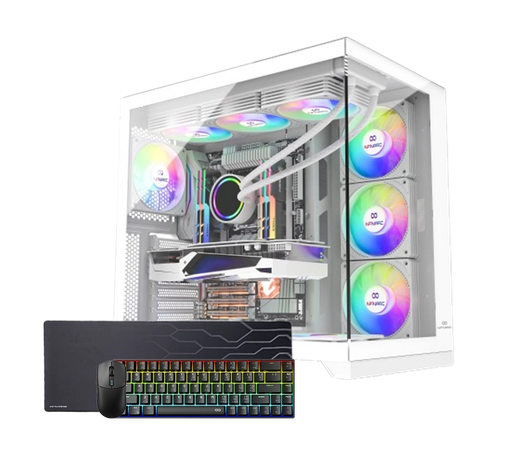
Core Ultra 9 vs Ultra 7 vs Ultra 5 PCs
The right Core Ultra tier depends primarily on workload:
Processor TierGeneral PositioningPotential UsersCore Ultra 9Premium performancePower users, creators, demanding workloadsCore Ultra 7High performanceGaming, creation, multitaskingCore Ultra 5MainstreamEveryday use, productivity, balanced gaming
These categories are useful for initial shopping, but they should not replace a comparison of the exact processor models.
Generation, architecture, model specifications, power limits, and system configuration can all influence actual performance.
PCs Intel Core i9 for Power Users
PCs Intel Core i9 have long been associated with the higher-performance tiers of Intel's traditional Core lineup.
Depending on the generation and exact CPU, Core i9 PCs can suit high-end gaming, streaming, video production, rendering, multitasking, and professional applications.
One important mistake to avoid is comparing processors based only on the words “Core i9.”
An older Core i9 and a newer Intel processor can differ substantially in architecture, platform features, efficiency, and performance.
Always check the full CPU model and generation before buying.
PCs Intel Core i7 for Gaming and Productivity
PCs Intel Core i7 have traditionally been popular among gamers, creators, and users who need more performance than a mainstream PC while avoiding the highest processor tier.
A well-balanced Core i7 PC can be suitable for:
Gaming + Streaming + Productivity + Content Creation + Multitasking
For gaming systems, GPU pairing is particularly important.
If your primary goal is gaming, spending the entire budget on a powerful CPU while choosing a weak graphics card may result in worse gaming performance than a more balanced CPU-GPU combination.
The target monitor resolution and refresh rate should therefore influence the complete configuration.
PCs Intel Core i5 for Mainstream Gaming and Everyday Computing
PCs Intel Core i5 can offer strong value for mainstream gaming, home computing, education, office work, and general productivity.
Modern Core i5 systems can vary significantly depending on generation and model, so the i5 name alone does not tell you exactly how a PC will perform.
For gamers working within a defined budget, an appropriate Core i5 can leave more money available for the graphics card, which may provide a larger performance benefit in GPU-intensive games.
A Core i5 PC can therefore be a practical option when performance, cost, and component balance are equally important.
Intel Core Ultra vs Intel Core: What's the Difference When Buying a PC?
Monitors for Every Setup: From 1080p Gaming to 4K and Ultrawide Displays
When comparing Intel Core Ultra PCs with Intel Core i9, i7, and i5 systems, avoid treating the tier names as direct equivalents.
The processor families can belong to different architectures, generations, and platforms. They may also differ in integrated features, memory support, power characteristics, and other capabilities.
This means a simple comparison such as:
Ultra 7 = i7
is not sufficiently accurate for making a purchasing decision.
Instead, compare the exact CPU models based on your workload.
For gaming, examine relevant gaming benchmarks. For content creation, consider performance in the software you actually use. For productivity, evaluate whether the additional performance of a higher-tier processor provides meaningful value.
Which Intel Processor Is Best for Gaming PCs?
There is no single Intel CPU tier that is automatically best for every gaming PC.
Gaming performance depends on:
CPU + GPU + Game + Resolution + Graphics Settings + RAM + Target FPS
At higher resolutions, graphics performance can become increasingly important in many games. Competitive gamers targeting extremely high frame rates may place more emphasis on CPU performance.
This is why choosing between a Core Ultra 9, Ultra 7, Ultra 5, i9, i7, or i5 should always be done in the context of the complete gaming PC.
How Much RAM Should an Intel PC Have?
RAM requirements vary according to workload.
Gaming and general-purpose PCs need sufficient memory to handle the operating system, applications, games, browsers, and background processes comfortably. Professional applications and heavy creative workloads may benefit from greater capacity.
You should also check whether the selected platform supports DDR4 or DDR5, as memory compatibility depends on the CPU and motherboard.
Don't choose a PC simply because it advertises DDR5. Consider capacity, speed, compatibility, upgradeability, and total system performance together.
SSD, GPU, and Cooling Are Equally Important
Processor choice is only the beginning.
A fast NVMe SSD can improve system responsiveness and provide fast storage for applications and games. A dedicated NVIDIA GeForce RTX or other suitable GPU can be critical for gaming, 3D workloads, and GPU-accelerated applications.
Cooling also needs to match the processor.
Depending on the exact CPU and configuration, PCs may use an Air Cooler or AIO liquid cooler. The goal should be appropriate thermal performance rather than choosing a cooling system purely for appearance.
How to Choose Between Intel PCs
Before purchasing, compare the system in this order:
1. Intended use → Gaming, work, creation, or everyday computing.
2. Exact CPU model → Not just Ultra 7, i7, or i5.
3. GPU → Particularly important for gaming and graphics workloads.
4. RAM → Capacity, generation, and upgradeability.
5. Storage → SSD type and capacity.
6. Cooling → Appropriate for the processor.
7. Motherboard → Features, ports, networking, and expansion.
8. Power supply → Suitable capacity and quality.
9. Price → Compare the complete PC rather than the CPU alone.
Find the Right Intel PC for Your Workload
Choosing between PCs Intel Core Ultra 9, PCs Intel Core Ultra 7, PCs Intel Core Ultra 5, PCs Intel Core i9, PCs Intel Core i7, and PCs Intel Core i5 is ultimately about matching processor performance to your actual requirements.
Core Ultra 9 and Core i9 systems can target demanding users, while Core Ultra 7 and Core i7 configurations can provide strong performance across gaming, productivity, and creation. Core Ultra 5 and Core i5 PCs can offer a more accessible balance for mainstream users.
The best PC is not necessarily the one with the highest processor tier. A well-balanced combination of CPU, GPU, RAM, SSD, motherboard, cooling, and power supply can provide better value and a better real-world experience than overspending on one component while compromising the rest.