الخميس، 20 أغسطس 2026

Intel PC Guide: Core Ultra 9, Ultra 7, Ultra 5, Core i9, i7, and i5 Compared

Choosing the right PC often starts with the processor. The CPU influences gaming performance, multitasking, productivity, content creation, and the overall responsiveness of a computer. However, Intel offers several processor families and performance tiers, which can make infiniarc choosing the right system more complicated.

Buyers may encounter PCs Intel Core Ultra 9, PCs Intel Core Ultra 7, PCs Intel Core Ultra 5, PCs Intel Core i9, PCs Intel Core i7, and PCs Intel Core i5 when comparing desktop computers. Although the names indicate different product tiers, the exact processor model and generation are essential when evaluating real-world performance.

Understanding these categories can help you select a PC that fits your gaming, professional, creative, or everyday computing requirements without paying for processing power you do not need.
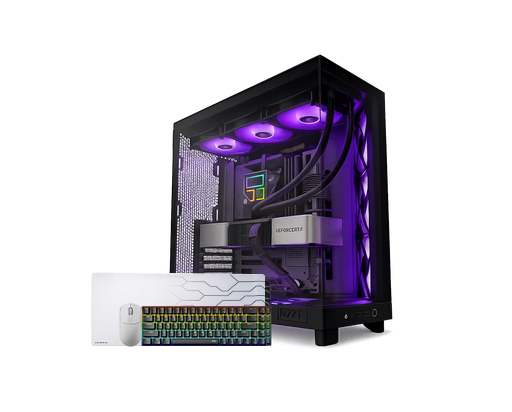
انفيني ارك GeForce RTX 5060 - Intel Core Ultra 7 - ذاكرة 16GB DDR5 بي سي قيمنق تبريد مائي

Why Does the Processor Matter When Choosing a PC?

The processor, or CPU, handles many of the calculations required by your operating system, games, applications, and background tasks.

CPU performance can affect multitasking, gaming frame rates in CPU-sensitive scenarios, video editing, software development, rendering, data processing, and general productivity.

However, the CPU should always be considered alongside other PC components, including:

  • Graphics card or GPU
  • RAM
  • SSD storage
  • Motherboard
  • Cooling system
  • Power supply
  • Display
  • Upgrade options

A high-end processor paired with insufficient RAM or an unsuitable graphics card may not provide the balanced performance you expect.

انفيني ارك GeForce RTX 5070 - Intel Core Ultra 7- ذاكرة 16GB DDR5 بي سي قيمنق تبريد مائي

PCs Intel Core Ultra 9 for Demanding Performance

PCs Intel Core Ultra 9 target users looking for high levels of processing performance and modern platform capabilities.

Depending on the exact processor model, these systems can be relevant for demanding multitasking, gaming, content creation, development, professional applications, and other CPU-intensive workloads.

Core Ultra 9 PCs are particularly worth considering when applications can make meaningful use of higher processor performance. Creative professionals working with large projects, for example, may have different requirements from someone who primarily browses the web and uses office applications.

Because these systems can occupy a premium segment, buyers should also check the cooling system, RAM capacity, storage, motherboard, and GPU to ensure the entire PC is appropriately configured.

انفيني ارك GeForce RTX 5070 Ti - Intel Core Ultra 7 - ذاكرة 16GB DDR5 بي سي قيمنق تبريد مائي

Who Should Consider an Intel Core Ultra 9 PC?

A Core Ultra 9 system can make sense for users who regularly run demanding workloads or want a high-performance desktop configuration.

Potential use cases include:


  • High-end gaming
  • Video editing
  • Content creation
  • Heavy multitasking
  • Software development
  • Professional applications
  • Streaming
  • CPU-intensive workloads

For lighter everyday computing, however, a lower processor tier may provide better value.

انفيني ارك GeForce RTX 5090 - Intel Core Ultra 7 - ذاكرة 32GB DDR5 بي سي قيمنق تبريد مائي

PCs Intel Core Ultra 7 for Performance and Versatility

PCs Intel Core Ultra 7 can offer an attractive middle ground for users who need strong performance but do not necessarily require the highest processor tier.

Depending on the specific CPU and system configuration, these PCs can handle gaming, streaming, productivity, creative applications, and demanding multitasking.

Core Ultra 7 can be particularly interesting for buyers building a versatile PC that needs to perform well across several types of workloads.

When comparing systems, consider the complete hardware configuration rather than focusing only on the CPU badge. An Ultra 7 PC with an appropriate GPU, sufficient RAM, fast NVMe SSD, and effective cooling may provide a better overall experience than an unbalanced higher-tier system.
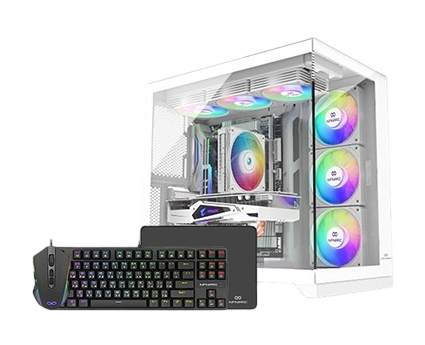
انفيني ارك GeForce RTX 5060 Ti - Intel Core Ultra 7- ذاكرة 16GB DDR5 بي سي قيمنق أبيض تبريد مائي


PCs Intel Core Ultra 5 for Mainstream Users


PCs Intel Core Ultra 5 are positioned toward mainstream users who want modern computing capabilities while maintaining a more balanced budget.

These systems can be suitable for everyday productivity, studying, office applications, entertainment, multitasking, and gaming when paired with an appropriate graphics card.

For many buyers, this category can also make financial sense because it allows more of the budget to be allocated to components that may have a greater impact on their specific workload.

A gamer, for example, may benefit more from pairing a suitable Core Ultra 5 processor with a stronger GPU than spending significantly more on the CPU while compromising graphics performance.
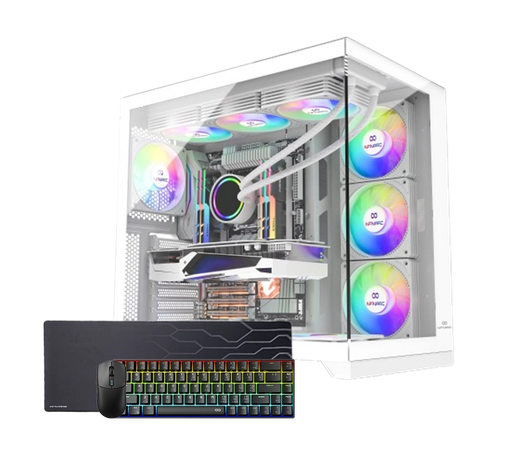
انفيني ارك GeForce RTX 5060 - Intel Core Ultra 7 - ذاكرة 16GB DDR5 بي سي قيمنق أبيض تبريد مائي


Core Ultra 9 vs Ultra 7 vs Ultra 5 PCs

The right Core Ultra tier depends primarily on workload:

Processor TierGeneral PositioningPotential UsersCore Ultra 9Premium performancePower users, creators, demanding workloadsCore Ultra 7High performanceGaming, creation, multitaskingCore Ultra 5MainstreamEveryday use, productivity, balanced gaming

These categories are useful for initial shopping, but they should not replace a comparison of the exact processor models.

Generation, architecture, model specifications, power limits, and system configuration can all influence actual performance.


PCs Intel Core i9 for Power Users

PCs Intel Core i9 have long been associated with the higher-performance tiers of Intel's traditional Core lineup.

Depending on the generation and exact CPU, Core i9 PCs can suit high-end gaming, streaming, video production, rendering, multitasking, and professional applications.

One important mistake to avoid is comparing processors based only on the words “Core i9.”

An older Core i9 and a newer Intel processor can differ substantially in architecture, platform features, efficiency, and performance.

Always check the full CPU model and generation before buying.


PCs Intel Core i7 for Gaming and Productivity

PCs Intel Core i7 have traditionally been popular among gamers, creators, and users who need more performance than a mainstream PC while avoiding the highest processor tier.

A well-balanced Core i7 PC can be suitable for:

Gaming + Streaming + Productivity + Content Creation + Multitasking

For gaming systems, GPU pairing is particularly important.

If your primary goal is gaming, spending the entire budget on a powerful CPU while choosing a weak graphics card may result in worse gaming performance than a more balanced CPU-GPU combination.

The target monitor resolution and refresh rate should therefore influence the complete configuration.


PCs Intel Core i5 for Mainstream Gaming and Everyday Computing

PCs Intel Core i5 can offer strong value for mainstream gaming, home computing, education, office work, and general productivity.

Modern Core i5 systems can vary significantly depending on generation and model, so the i5 name alone does not tell you exactly how a PC will perform.

For gamers working within a defined budget, an appropriate Core i5 can leave more money available for the graphics card, which may provide a larger performance benefit in GPU-intensive games.

A Core i5 PC can therefore be a practical option when performance, cost, and component balance are equally important.


Intel Core Ultra vs Intel Core: What's the Difference When Buying a PC?


Monitors for Every Setup: From 1080p Gaming to 4K and Ultrawide Displays

When comparing Intel Core Ultra PCs with Intel Core i9, i7, and i5 systems, avoid treating the tier names as direct equivalents.

The processor families can belong to different architectures, generations, and platforms. They may also differ in integrated features, memory support, power characteristics, and other capabilities.

This means a simple comparison such as:

Ultra 7 = i7

is not sufficiently accurate for making a purchasing decision.

Instead, compare the exact CPU models based on your workload.

For gaming, examine relevant gaming benchmarks. For content creation, consider performance in the software you actually use. For productivity, evaluate whether the additional performance of a higher-tier processor provides meaningful value.


Which Intel Processor Is Best for Gaming PCs?


There is no single Intel CPU tier that is automatically best for every gaming PC.

Gaming performance depends on:

CPU + GPU + Game + Resolution + Graphics Settings + RAM + Target FPS

At higher resolutions, graphics performance can become increasingly important in many games. Competitive gamers targeting extremely high frame rates may place more emphasis on CPU performance.

This is why choosing between a Core Ultra 9, Ultra 7, Ultra 5, i9, i7, or i5 should always be done in the context of the complete gaming PC.


How Much RAM Should an Intel PC Have?


RAM requirements vary according to workload.

Gaming and general-purpose PCs need sufficient memory to handle the operating system, applications, games, browsers, and background processes comfortably. Professional applications and heavy creative workloads may benefit from greater capacity.

You should also check whether the selected platform supports DDR4 or DDR5, as memory compatibility depends on the CPU and motherboard.

Don't choose a PC simply because it advertises DDR5. Consider capacity, speed, compatibility, upgradeability, and total system performance together.

انفيني ارك GeForce RTX 5070 Ti - Intel Core Ultra 7 - ذاكرة 16GB DDR5 بي سي قيمنق تبريد مائي

SSD, GPU, and Cooling Are Equally Important


Processor choice is only the beginning.

A fast NVMe SSD can improve system responsiveness and provide fast storage for applications and games. A dedicated NVIDIA GeForce RTX or other suitable GPU can be critical for gaming, 3D workloads, and GPU-accelerated applications.

Cooling also needs to match the processor.

Depending on the exact CPU and configuration, PCs may use an Air Cooler or AIO liquid cooler. The goal should be appropriate thermal performance rather than choosing a cooling system purely for appearance.


How to Choose Between Intel PCs


Before purchasing, compare the system in this order:

1. Intended use → Gaming, work, creation, or everyday computing.

2. Exact CPU model → Not just Ultra 7, i7, or i5.

3. GPU → Particularly important for gaming and graphics workloads.

4. RAM → Capacity, generation, and upgradeability.

5. Storage → SSD type and capacity.

6. Cooling → Appropriate for the processor.

7. Motherboard → Features, ports, networking, and expansion.

8. Power supply → Suitable capacity and quality.

9. Price → Compare the complete PC rather than the CPU alone.


Find the Right Intel PC for Your Workload


Choosing between PCs Intel Core Ultra 9, PCs Intel Core Ultra 7, PCs Intel Core Ultra 5, PCs Intel Core i9, PCs Intel Core i7, and PCs Intel Core i5 is ultimately about matching processor performance to your actual requirements.

Core Ultra 9 and Core i9 systems can target demanding users, while Core Ultra 7 and Core i7 configurations can provide strong performance across gaming, productivity, and creation. Core Ultra 5 and Core i5 PCs can offer a more accessible balance for mainstream users.

The best PC is not necessarily the one with the highest processor tier. A well-balanced combination of CPU, GPU, RAM, SSD, motherboard, cooling, and power supply can provide better value and a better real-world experience than overspending on one component while compromising the rest.


Read More

الأربعاء، 19 أغسطس 2026

High Refresh Rate Monitors: From 165Hz to 720Hz for Competitive Gaming

High refresh rate monitors have become an essential part of competitive gaming setups. While resolution and image quality remain important, players who prioritize speed, responsiveness, and انفني ارك smooth motion often focus heavily on refresh rate when choosing a new display.

Today's gaming market includes everything from mainstream 165Hz Monitors to faster 240Hz, 280Hz, 330Hz, and 480Hz displays, while the highest refresh-rate category continues to push toward 720Hz Monitors. Buyers may also encounter searches such as 165Hz 280Hz Monitors, 280Hz 480Hz Monitors, 480Hz 720Hz Monitors, 240Hz 480Hz Monitors, and 165Hz 330Hz Monitors when comparing different performance levels.

Beyond speed, design also matters. Black Monitors remain a versatile choice for most gaming setups, while White gaming monitors can create a cleaner and more distinctive desktop aesthetic.

Understanding what these refresh rates actually mean can help you choose a monitor based on real gaming requirements rather than simply buying the highest number available.

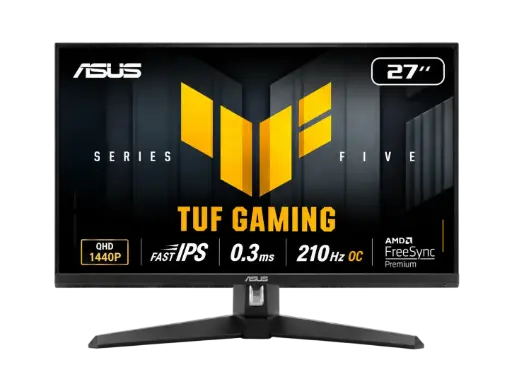
ASUS TUF Series gaming 5 VG27AQ5A-J, 27" QHD (2560x1440), 210Hz OC, Fast IPS, 0.3ms, ELMB SYNC, Black Gaming Monitor - Infiniarc edition

What Is Monitor Refresh Rate?

Refresh rate describes how many times a monitor can refresh the displayed image each second and is measured in Hertz, or Hz.

A 165Hz display can refresh up to 165 times per second, while a 280Hz monitor can refresh up to 280 times per second under supported conditions.

As refresh rates increase, motion can appear smoother and the interval between individual display refreshes becomes shorter.

This is particularly relevant to fast-paced games such as competitive shooters, where players frequently make rapid camera movements and react to events happening within fractions of a second.

However, refresh rate should not be considered alone. Your PC needs to generate sufficiently high frame rates to make effective use of a high-refresh gaming monitor.


165Hz 280Hz Monitors: Moving Beyond Mainstream Gaming

Comparing 165Hz 280Hz Monitors represents an important decision for gamers moving from mainstream high-refresh gaming toward more competitive displays.

165Hz already provides a smooth gaming experience and can work well for a broad range of gaming genres. It is also a practical target for PCs that cannot consistently produce extremely high frame rates.

Moving toward 280Hz places greater emphasis on competitive performance.

A 280Hz monitor can be particularly attractive for esports players with powerful gaming PCs capable of generating very high FPS in games such as competitive shooters.

The decision should therefore depend on both your games and your PC.

For graphically intensive single-player titles, increasing resolution or image quality may sometimes provide more noticeable value than moving from 165Hz to 280Hz.

Asus ROG Strix XG27AQWMG, 27" QHD (2560 x 1440) TrueBlack Glossy Tandem OLED, 280Hz, 0.03ms, NVIDIA G-Sync & AMD FreeSync, Black Gaming Monitor

280Hz 480Hz Monitors for Competitive Players

The comparison between 280Hz 480Hz Monitors moves further into enthusiast and esports territory.

At this level, the monitor is designed around users who prioritize motion performance and responsiveness.

A 480Hz display can refresh substantially more frequently than a conventional gaming monitor, but taking advantage of that capability requires an appropriate combination of hardware and software.

The CPU becomes especially important when targeting extremely high frame rates. While the GPU still matters, competitive games running at lower resolutions and optimized graphics settings can become increasingly dependent on processor performance.

Gamers considering this category should evaluate:


  • CPU performance
  • GPU performance
  • Game engine limitations
  • Target FPS
  • Resolution
  • Response characteristics
  • Adaptive-sync support

The highest refresh rate does not automatically provide the best overall gaming experience for every player.

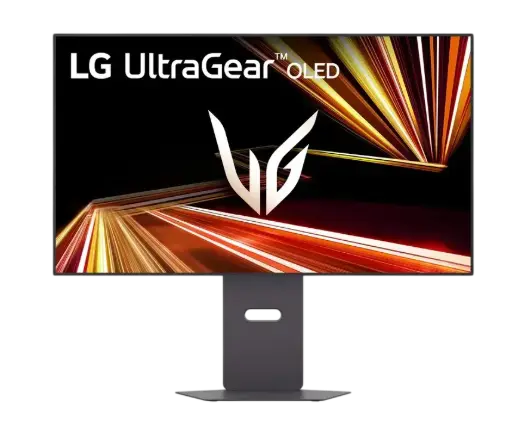
LG 27" UltraGear QHD 2560 x 1440, 4th Gen, Matte WOLED, 280Hz, VESA DisplayHDR True Black, Gaming Monitor

480Hz 720Hz Monitors: Extreme Refresh Rates

480Hz 720Hz Monitors represent the extreme end of high-refresh gaming displays.

A 480Hz monitor is already designed primarily around users seeking exceptional motion performance. Moving toward 720Hz pushes this concept even further.

These monitors are most relevant to highly competitive gaming scenarios where extremely high frame rates can be generated and small improvements in motion clarity and latency are valued.

For an average gamer playing cinematic AAA games at high resolutions, however, this level of refresh rate may provide less practical benefit than improvements in resolution, HDR, contrast, or screen size.

The PC requirements are another consideration.

Generating hundreds of frames per second can require a powerful CPU and GPU combination, and not every game can operate at these frame rates regardless of hardware.

LG UltraGear 32" 4th Gen Tandem OLED, Dual Mode 4K UHD 240Hz /FHD 480Hz, 0.03ms, G-Sync, DisplayHDR™ True Black500, Gaming Monitor

240Hz 480Hz Monitors: Which Is Better?

Comparing 240Hz 480Hz Monitors can help illustrate the difference between conventional competitive gaming and extreme esports-focused displays.

240Hz is already widely associated with competitive gaming. For many players, it provides an excellent combination of smooth motion, responsiveness, and achievable PC performance.

480Hz goes considerably further.

The potential advantage becomes more relevant when:

Your game supports extremely high FPS.

Your PC can consistently produce those frame rates.

Competitive responsiveness is more important than resolution.

You can perceive and benefit from the improved motion performance.

For users who also play demanding AAA games, a 240Hz monitor with a higher resolution or stronger image-quality characteristics may sometimes offer a more versatile experience.

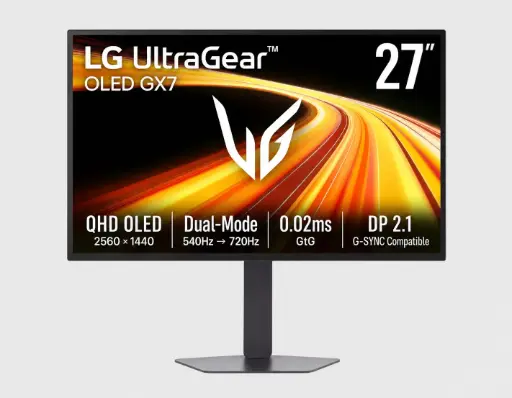
LG 27Inch UltraGear, OLED, Dual Mode QHD 540Hz or HD 720Hz 0.02ms G-Sync Compatible, Black Gaming Monitor 165Hz 330Hz Monitors: Performance vs Practicality

The 165Hz 330Hz Monitors comparison covers another interesting range.

A 165Hz gaming monitor can serve both casual and competitive gaming, while a 330Hz-class display moves significantly closer to esports-focused performance.

This creates a useful choice for players who want more speed without necessarily moving into the 480Hz or 720Hz categories.

Before upgrading, consider your current FPS.

If your PC typically produces 120–160 FPS in the games you play, purchasing a 330Hz display will not suddenly make the computer generate 330 frames per second.

The monitor and gaming PC should therefore be matched as a complete system.


165Hz vs 240Hz vs 280Hz vs 330Hz vs 480Hz vs 720Hz

The refresh-rate categories can be understood according to their general gaming focus:

Refresh RateTypical Focus165HzMainstream high-refresh gaming240HzCompetitive gaming280HzPerformance-focused competitive gaming330HzHigh-level competitive gaming480HzEnthusiast/esports performance720HzExtreme high-refresh competitive setups

These categories should not be interpreted as strict rankings of monitor quality.

A premium 165Hz monitor can offer better resolution, contrast, HDR performance, or color quality than another display with a much higher refresh rate.

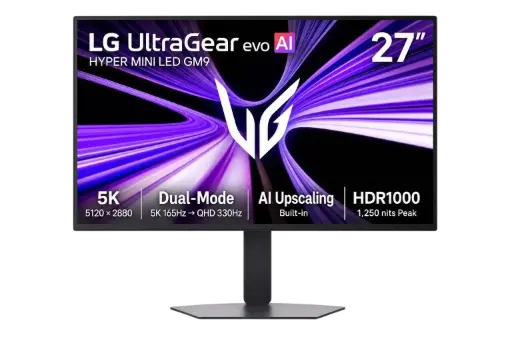
LG UltraGear 27 Inch evo AI GM9, Hyper Mini LED, Dual Mode 5K 165Hz/ QHD 330Hz, Gaming Monitor

Does Higher Refresh Rate Always Mean a Better Monitor?


Laptops by Screen Size: 13, 14, 15.6, 16, 17.3, and 18 Inch Compared

No. Refresh rate is only one part of display performance.

When comparing gaming monitors, you should also evaluate:

Resolution – FHD, QHD, UHD, or another format.

Panel Technology – influences contrast, colors, viewing characteristics, and motion performance.

Response Performance – affects how quickly pixels transition.

Input Latency – particularly relevant for competitive gaming.

Adaptive Sync – helps coordinate display refresh behavior with GPU output.

Screen Size – influences immersion and pixel density.

HDR and Contrast – important for image quality.

A 480Hz monitor isn't automatically better for you than a 165Hz display if your priority is 4K gaming, professional content creation, or cinematic image quality.


How Much FPS Do You Need for a High-Refresh Monitor?

A high-refresh monitor provides the greatest value when the PC can produce frame rates that make meaningful use of its capabilities.

For example, pairing a 480Hz display with a system producing only 80 FPS does not allow the game to provide 480 unique frames every second.

This is why competitive gamers often adjust graphics settings and sometimes use lower resolutions to increase FPS.

The relationship is:

CPU + GPU + Game + Graphics Settings → FPS → Monitor Refresh Rate

Your monitor purchase should therefore be based partly on the performance your PC can realistically achieve.


Resolution vs Refresh Rate: Which Matters More?

This depends entirely on the type of gaming experience you want.

For competitive esports:

Higher FPS + Higher Refresh Rate may be the priority.

For immersive AAA gaming:

Higher Resolution + Image Quality may be more important.

For mixed gaming:

A balance between resolution and refresh rate is often preferable.

For example, some users may prefer QHD at a strong refresh rate instead of choosing either extremely high-refresh FHD or demanding high-resolution 4K.

There is no universal winner because the two specifications improve different aspects of the visual experience.


Black Monitors for Gaming Setups


Laptops by Screen Size: 13, 14, 15.6, 16, 17.3, and 18 Inch Compared

Black Monitors remain one of the most common choices for gaming PCs.

Black bezels and stands can blend naturally with gaming peripherals, PC cases, speakers, keyboards, and darker desk setups.

Another advantage is component flexibility. Because black is widely used across gaming hardware, creating a consistent setup can be easier.

RGB lighting can also contrast effectively against black hardware, allowing users to customize the visual theme without changing the monitor itself.

However, monitor color has no direct impact on refresh rate, response performance, resolution, or gaming FPS.

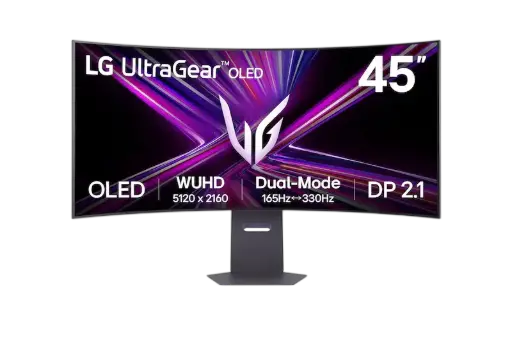
LG 45” UltraGear WUHD 5120 x 2160 5K OLED, 165Hz Or WFHD 330Hz Dual Mode, 0.03ms, FreeSync Premium Pro Compatible Gaming Monitor

White Monitors for Clean Gaming Setups

A White gaming monitor can provide a different aesthetic for users building an all-white or lighter desktop setup.

White displays can pair particularly well with white PC cases, keyboards, mice, desks, and other accessories.

Availability can be more limited depending on the exact refresh rate and specifications required, so users building a white gaming setup should avoid compromising important performance features purely to maintain the color theme.

Performance should come first:

Refresh Rate → Resolution → Panel → Response → Connectivity → Color.

This approach allows aesthetics to complement the setup rather than determine its capabilities.


Black vs White Monitors: Does Color Matter?

From a performance perspective, there is no inherent advantage to choosing Black or White.

The decision is primarily about:

Personal style

Desk design

PC color

Peripheral matching

Product availability

A Black 240Hz monitor and White 240Hz monitor with otherwise identical specifications should not perform differently simply because of their exterior color.

Therefore, select the required specifications first and choose your preferred design afterward.


Which Refresh Rate Should You Choose?

For many gamers, 165Hz provides a strong entry into high-refresh gaming. Competitive players may benefit from 240Hz, 280Hz, or 330Hz depending on their PC performance and games.

The jump to 480Hz and beyond is more specialized and primarily targets users who can generate extremely high frame rates and prioritize competitive performance above resolution and visual detail.

Before buying, ask:

What games do I play?

What FPS does my PC produce?

What resolution do I want?

Do I prioritize speed or image quality?

Is the monitor mainly for competitive gaming?

These questions are more important than simply choosing the largest Hz number.


Choose High Refresh Rate Monitors Based on Your Gaming Style

Choosing between 165Hz 280Hz Monitors, 280Hz 480Hz Monitors, 480Hz 720Hz Monitors, 240Hz 480Hz Monitors, and 165Hz 330Hz Monitors ultimately depends on your gaming style and PC performance.

165Hz can provide an excellent experience for mainstream gaming, while 240Hz, 280Hz, and 330Hz move increasingly toward competitive play. 480Hz and 720Hz target highly specialized high-frame-rate gaming environments.

Once you determine the performance level you need, you can choose between Black Monitors and White monitors to match the visual style of your gaming setup.

The best gaming monitor is not simply the one with the highest refresh rate. It is the display that creates the right balance between refresh rate, FPS, resolution, panel performance, response behavior, screen size, PC hardware, and design.


Read More

بحث هذه المدونة الإلكترونية

يتم التشغيل بواسطة Blogger.